Way back when The Da Vinci Code was first released, I was fascinated—not least because symbols and symbology have been tenants of my mystical journey and curiosity, seeking for decades. Not that I’m a code breaker, or have any ability beyond the New York Times crossword puzzle. However, I found his fiction—quote, unquote—to be in line with, or rather aligned with, what ancient mystics have found out about sacred sites, symbols, and the meaning behind current religious or theocratic principles, which, of course, have been merged, erased, and rewritten over the centuries.
So it was not without an investigator’s interest that I entered Temple Church—to look for the circular, the geometric, the symbolic. The Round. That perfect geometry Brown described so vividly, modeled after the Church of the Holy Sepulchre in Jerusalem and built by the Knights Templar in the twelfth century.
I half expected to find an etched clue or two—some cryptic Magdalene rose, a line of Latin code carved discreetly beneath a pew—but alas, I didn’t really find anything. Still, it was worth being there. Because what Brown dramatized in fiction, the Templars built in stone: a sacred geometry that invites not deciphering, but remembering.
The Round Church, its symmetry intact after nearly nine centuries, radiates the calm of proportions that predate religion. Circles were once the purest symbol of creation—the unbroken feminine principle, the cosmic womb. The Templars, those militant mystics, placed that shape at the heart of their order as both imitation and invocation of eternity.
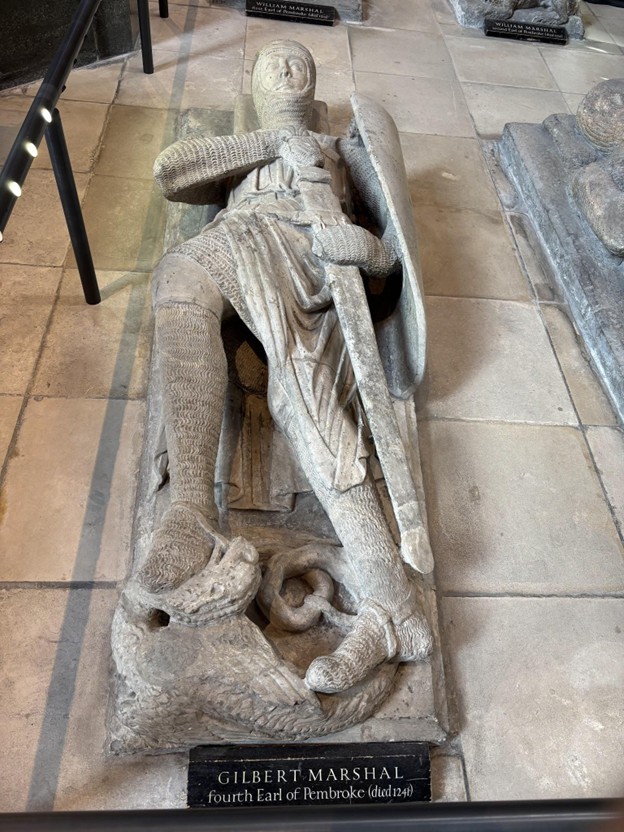
The effigies of the knights—cross-legged, swords sheathed, gazes fixed upward—look less like tombs and more like archetypes of transcendence. Each carved face is an unfinished question: what is the code we’ve forgotten to read?
I walked the nave slowly, tracing the cool limestone with my fingertips. The acoustics were uncanny—whispers seemed to return a breath later, as if the building itself answered. Here, theology isn’t written in text; it’s written in space. Light pours down like revelation; every arch echoes the vault of the sky.
Contents of the Temple Church
1. John Selden’s Tomb – Resting place of the 17th-century jurist whose writings linked scripture and common law.
2. The Round Church Effigies – Nine stone knights, cross-legged and eternal, embodying the Templars’ sacred code.
3. The Altar of St. Ann and the Virgin – A quiet devotion to divine motherhood amid martial stone.
4. The Piscina – A carved basin once used to wash sacred vessels, relic of ritual precision.
5. The Chancel Screen – Ornate lattice dividing nave and choir, symbol of boundary and passage.
6. The East Window – Stained glass blazing with Christ’s image, light as theology.
7. The Charter Window – Modern glass honoring Magna Carta, the law rendered luminous.
8. The Templar Seal Carving – Two riders on one horse, emblem of humility and brotherhood.
9. The Knight’s Door – Low arched entry once trod by armored feet in prayerful procession.
10. The Organ and Loft – Oak and brass resonances that turn the Round into sound.
11. The Ambulatory Arches – Twelve spans of perfect geometry circling the nave like the zodiac.
12. The Pulpit – A carved stand marked with red crosses, where scripture met sword.
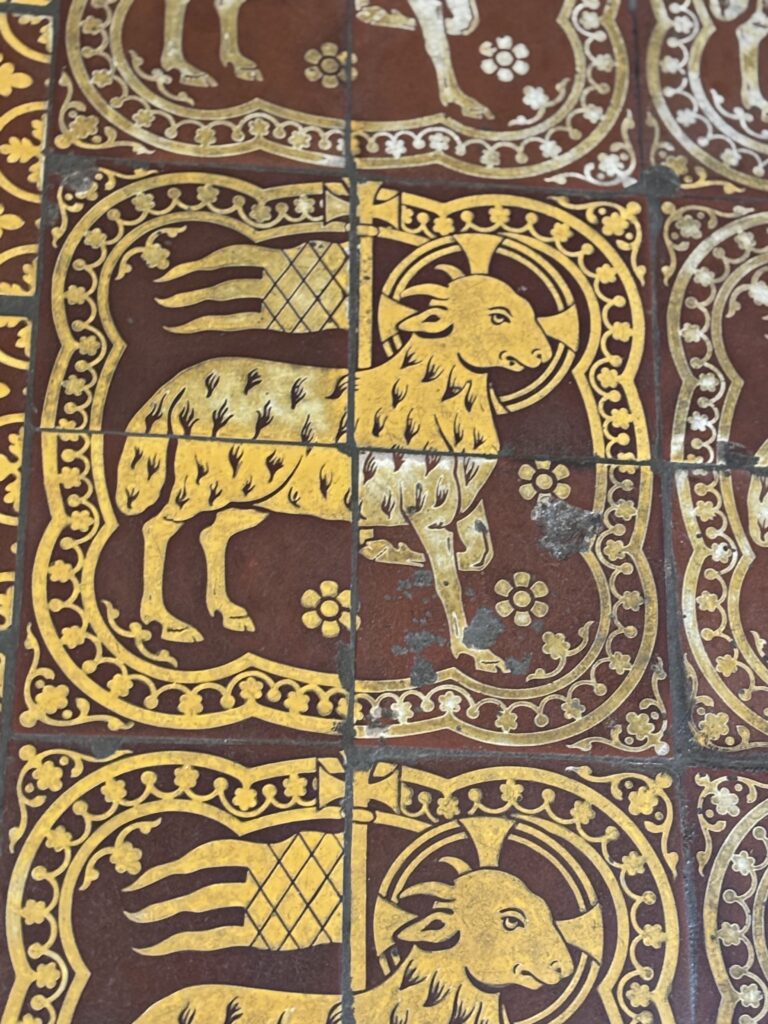
13. The South Door Tympanum – Medieval relief of the Lamb of God, weathered yet enduring.
14. The Chapter House – Council chamber turned sanctuary of memory and reflection.
15. The Royal Arms of Henry VIII – The crown’s emblem asserting dominion over the Temple’s faith.
The Architectures That Speak
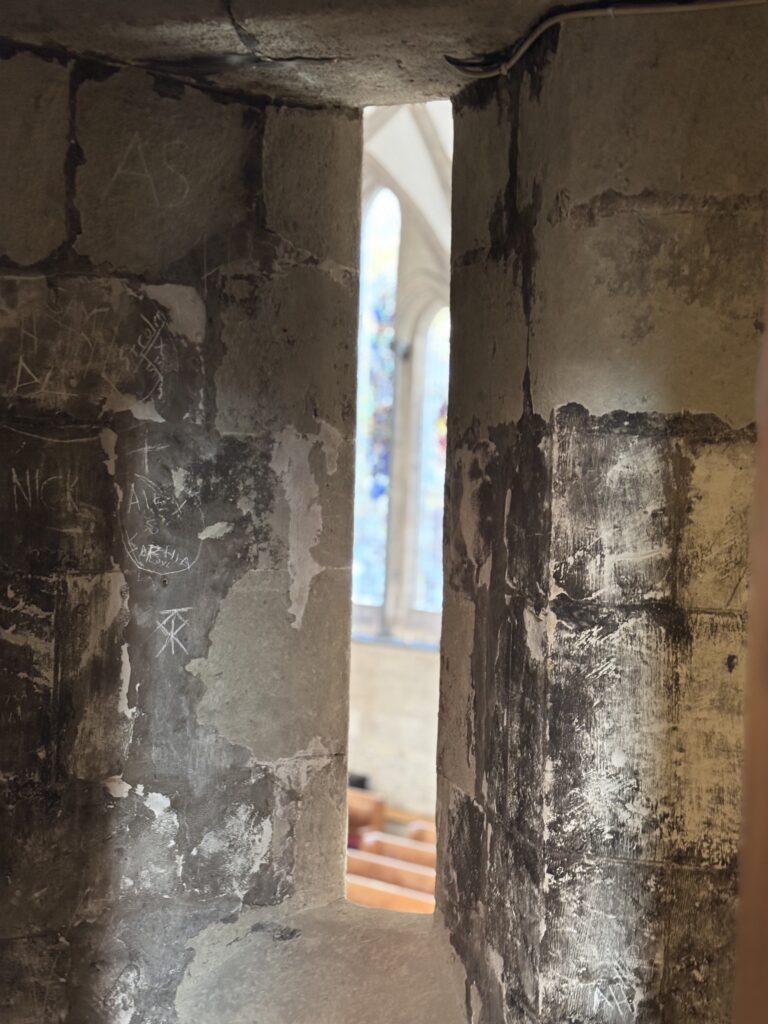
From the vantage point of an upper floor, I peered through a narrow vertical crack that allowed a view of the altar below—a sliver of holiness just wide enough to warrant piety. It was voyeuristic and reverent all at once, like glimpsing faith through a keyhole.
It has not been since the Orthodox church I visited in Hydra that I stepped into such a luminous environment. Yet this was different—earthier, less grandiose. The Hydra church shimmered with gold leaf and incense; Temple Church glowed with subdued beauty, the kind that speaks softly instead of dazzling outright.
Temple Church felt less like a sanctuary and more like a mandala of stone. Standing at its center, I sensed that its secret was not something hidden but something mirrored. A reminder that the true temple is built within consciousness itself.
When I left, I carried with me a quiet sense that the mystery was unfinished.
From London to Austin: The Return of the Secret
Back in Austin, with the dust of travel barely settled, I looked up Dan Brown again and discovered he had just released a new novel—The Secret of Secrets.
I’ve been on a stretch of writing and therefore haven’t been reading books for at least six months; writing is too cerebral. But when I saw that title, The Secret of Secrets, I immediately ordered it.
I began reading it, and suddenly the aha moment came: I realized my temple—my church—is me. My altar to that temple is composed of my thoughts and my soul.