
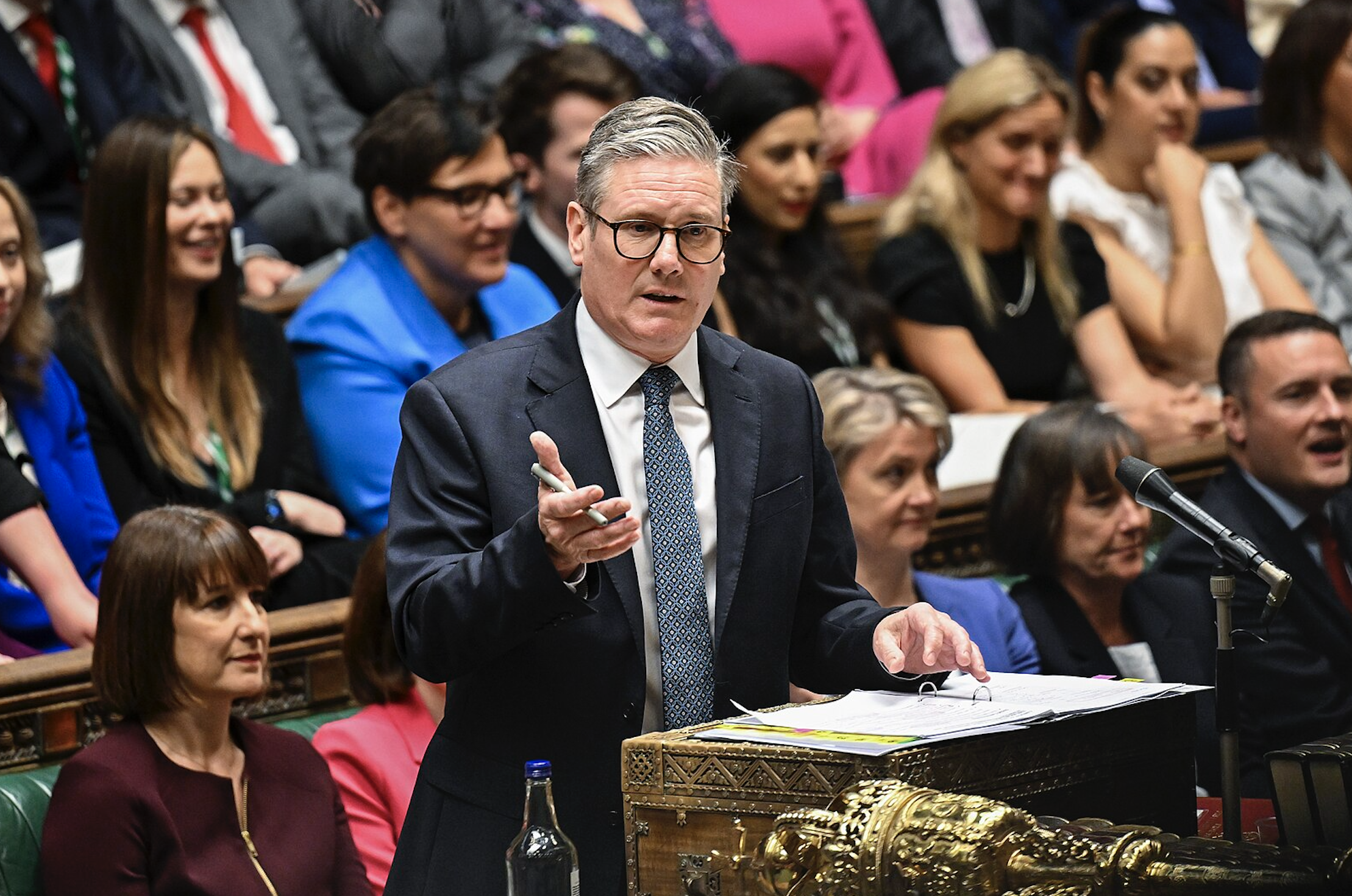
Public Discontent & The Trap of a Technocrat.
That is the subheadline in a 2025 article by Brian Connelly. “The technocrat’s trap,” he wrote, “refers to inherent issues of governing an active democracy as a managerial centrist…” Connelly reflects the general consensus that Prime Minister “Starmer came to power as the ultimate political technocrat… his managerial-centrist governing style is a cautious, technocratic balancing act that raises revenue without articulating a broader ideological project.”
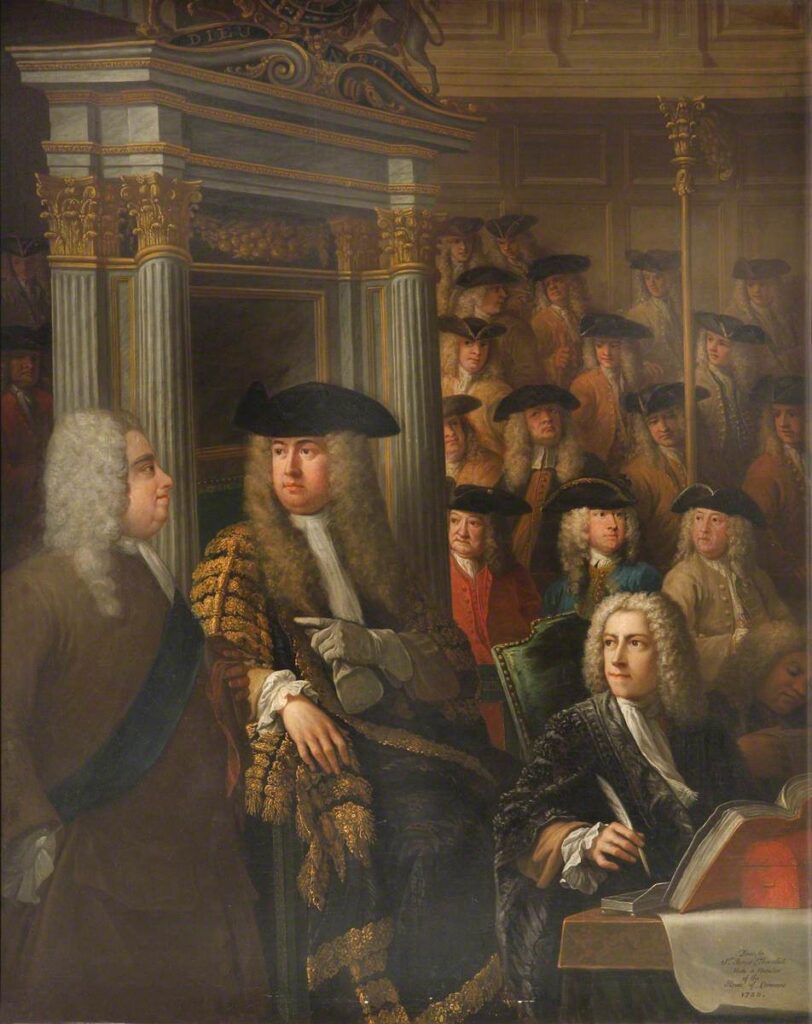
The charge has been levelled at prime ministers before. Indeed, in this book on satire, Paddy Bullard writes of the very first PM, Sir Robert Walpole. A political publication titled The Craftsman was brought into existence to oppose Walpole. It “complained about artfulness and expertise in politics…The Craftsman set out to present Walpole’s technocratic ability as fraudulent and corrupt, a false artfulness at odds with the effrontery with which he faced down his opponents.”
Bullard, who teaches English Literature at the University of Reading, tells us of the “delicate task” the opposition writers had in their articles. “They set out to argue that technical proficiency in statesmanship is bad for the commonwealth.” That seems to be at the heart of why Starmer’s favourability rating is now -48%, with 69% viewing him unfavourably. Starmer’s current figures sit among the lowest recorded for any British PM in the last half century. Not surprisingly, he has been the subject of satire and parody. Walpole only had to deal with the print media, but Starmer now gets mocked on the television show Saturday Night Live UK.
While it was not necessarily his intention, Bullard lays the groundwork for our understanding of this situation today, in his quote from the very first issue of The Craftsman in 1726, five years after Walpole’s premiereship began:
“The Mystery of State-Craft abounds with such innumerable Frauds, Prostitutions, and Enormities in all Shapes, and under all Disguises, that it is an inexhaustible Fund, and eternal resource for Satire.” Exactly 300 years later, nothing has changed!
Politics is not, however, the main focus of this deeply researched book by Bullard. It explores how British writers expressed the 18th century age of invention through not only satire but critical and oblique poetry. They took the practical world being reshaped by newly-developing mechanical expertise, and re-framed it in peculiar books that we now collectively call the “mock arts.”
In 1755, Adam Smith offered an impressionistic view of the work of the great English poets (such as Shakespeare and Milton) which above all prized ‘imagination, genius and invention.’
“There often appears, amidst some irregularities and extravagancies, a strength of imagination so vast, so gigantic and supernatural, as astonishes and confounds the reader.”
Bullard takes his cue for this book from those works that are ‘amidst.’ He writes “Literary irregularity and extravagance – associated with the inventive energies of satire – belong to the same set of cultural tendencies that also produce the tragic and epic sublime. The culture of invention is represented as something powerful, disorderly and nationally specific.”
The ideas that animate this book are best expressed by Alexander Pope. The relation between modern science and the mechanical trade had a great impact on his own creative powers, writes Bullard. In one poem he offered “similes drawn from the mechanics of projectiles and of clockwork” and he caps it with a passage derived from Robert Boyle’s “celebrated experiment with the air-pump.”
In a key passage, Bullard writes about the seriousness of Pope’s engagement with the mechanical sciences:
“Behind it there is a bolder claim: that to set the discoveries of the scientific revolution into motion, and to make that motion orderly and meaningful, the imaginative elasticity of the poet and the fire of the satirist remain indispensable.”
To give but one example of how this played out: consider the scientists Robert Hooke and Robert Boyle; and the satirist Jonathan Swift. He wrote one of the few 18th century novels that is still read today: the 1726 satire Gulliver’s Travels.
“Hooke retained a principle of operational dexterity in his idea of scientific expertise. Boyle’s contrastingly severe exclusion of mechanical skill from his own scheme of useful knowledge indicates a willed disconnection of experimental investigation from the everyday scene of practical application. This is a similar break of imagination that Swift would attribute to the bungling architects of Laputa in Gullliver’s Travels, who despise the practical branch of their art as ‘vulgar and mechanick’ but replace it with instructions ‘too refined for the Intellectuals of their Workmen.’”
This deep and complex study, which I could only offer a flavour of in this review, is a significant advance on understanding 18th century Britain. Any historian of science will be well advised to read this, as will historians of literature, who will be enamoured by Bullard’s study of the 1801 novel Belinda where each of the “major characters is caught up in the performance of intelligence, which most often manifests as satirical wit.” In her work, author Maria Edgeworth “uses the sorts of analogies between literary and ‘useful’ or mechanical-artisanal work that are characteristic of the Enlightenment mock arts.” It is a delightful concluding chapter to this important book.
Reference: Connelly, Brian. “Starmer’s Shallow Victory: Why a Record Majority Produced Britain’s Most Unpopular Government.” Bruin Political Review, 18 December 2025 issue, online.
Image: Speaker Onslow calling upon Sir Robert Walpole (far left) to speak in the House of Commons, by William Hogarth. Courtesy Wikimedia Commons.