
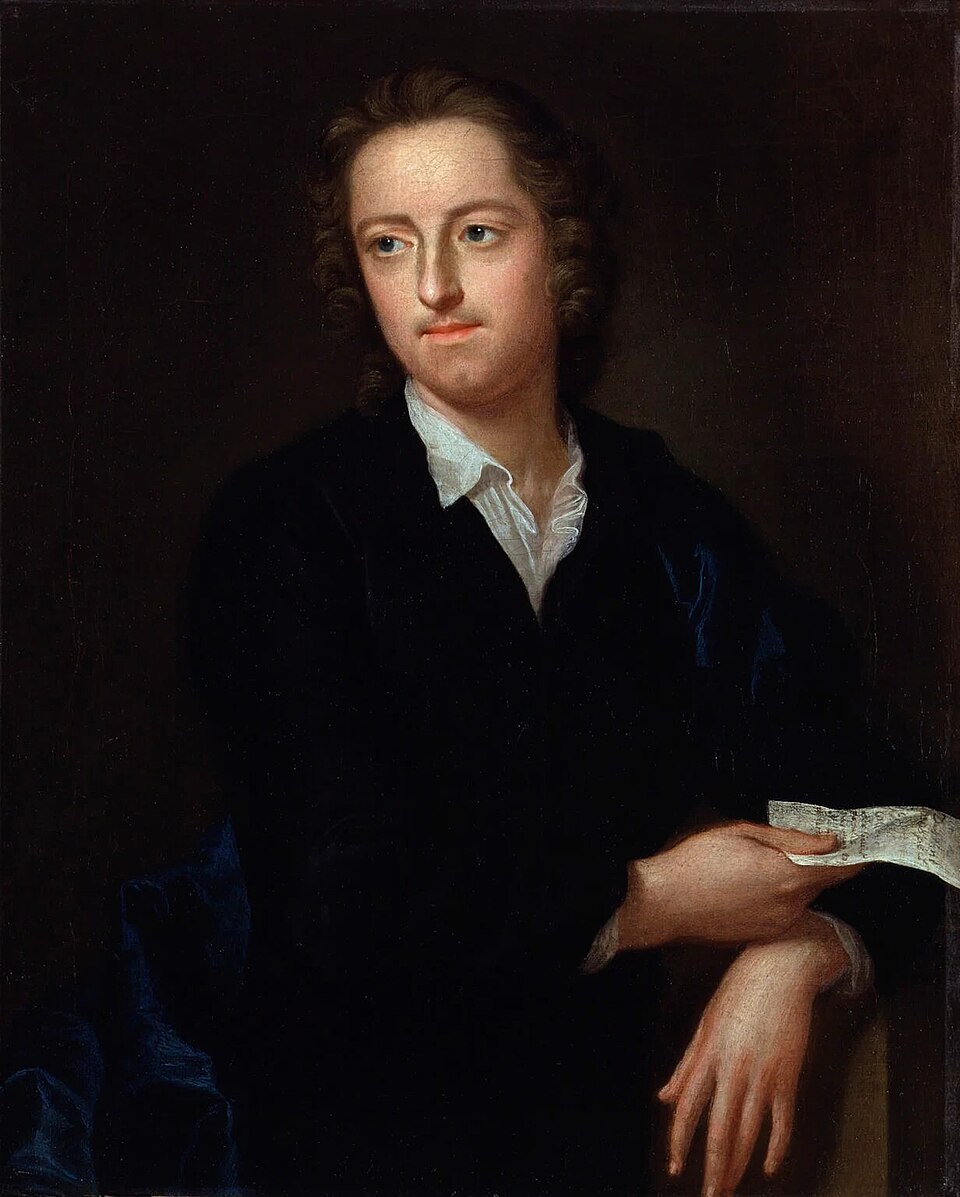
Image: The poet Thomas Gray
Timothy Heimlich (Assistant Professor of English, Duke University, North Carolina) grew up in the suburbs of Milwaukee, Wisconsin, and frequently rode his bike to the nearby village of Wales, which was founded by Welsh immigrants in the 1840s. It was this early experience that heavily influenced his academic focus, which we can hold in our hands in the form of this fascinating book by Cambridge University.
“Wales,” he writes in the book, “is most valuable for its evident capacity to transcend history, to preserve and transmit an unspoiled primeval Britishness into a time within living memory.” While the author does not mention it, I find the “magnesium light” of Wales, as evoked by the mid-20th century poet Lynette Roberts, to be something uniquely Welsh. Keeping it in mind can, at least metaphorically, illuminate much of the darkness that is Welsh history.
The famous writers about Wales were actually English, none more so than Wordsworth, England’s greatest poet of the late 18th/early 19th century. In his famous poem The Prelude (1805), “Wordsworth claims for himself the vacant crown of bard of Britain. He later dramatically and explicitly recants this ambitious and radical act in The Excursion (1814).” To get the story of Wordsworth, the reader must wait for the book’s Conclusion, where he states “This book is intended as a launching pad for new investigations of how British cultural identity was reinvented for an imperial era.”
The animating principle of the book is to explore what it means to be British. Today, that seems rather obvious. But, quoting from a Duke University interview (link below), the author says “According to the Oxford English Dictionary, the word ‘British’ in the early 18th century primarily meant Welsh. If you said you were British in 1703, it would have been strange to also claim you were English.”
Whatever the truth of the matter, the perception is that ancient Britons (those people who lived in what is now England, before the Romans and later Anglo-Saxons invaded) are still alive today. But these truly “British” people are actually the Welsh! From the end of Roman rule around the fifth century, until King Edward I of England conquered Wales in 1285, there is essentially no known Welsh history. This proved to be fortunate for antiquarians of later centuries, who projected all sorts of fantastical things unto those blank centuries.
But before I go further, I was astounded that the proverbial “elephant in room” was merely alluded to by Heimlich. It is true that England conquered Wales in 1285, but it can equally be asserted that Wales conquered England in 1485, exactly 200 years later.
Remember the Tudors? Yes, the most famous monarchs of all: the father of Henry VIII was Henry VII. Guess where he came from? His grandfather Owen Tudor was a Welsh soldier and courtier. Born around 1400 in Anglesey (in Wales), Owen was a descendant of a prominent line of Welsh rulers. His father and uncles participated in the failed Owain Glyn Dŵr Welsh rebellion against the English crown. After the uprising was suppressed, Owen traveled to England where he married the widow of the English King Henry V, and their son Edmond became the father of Henry VII, King of England! The name Henry VII does not appear in the book’s index, although ‘Tudor’ does appear.
Why this historical reality was so downplayed from his otherwise detailed exploration of Welsh history is beyond my understanding. Only the reader can decide if having this carefully and thoroughly considered in the highly contested history of Wales would affect Heimlich’s arguments and conclusions. Despite the Tudor Age, there has been for centuries a “Welsh resentment of English occupation.” It was best described by Edward Davies in a novel he wrote in 1794: The Welsh “still pine under an imaginary yoke.”
What is certain is that Dr. Samuel Johnson had a soft spot for Wales. For him, it was even a more authentically British space than England itself. In his day, the late 1700s, “Wales was still one of Europe’s poorest, most rural, and most agricultural countries.” But within 150 years, “it had been transformed into one of the continent’s richest, most urban, and most industrialised.” In this book Heimlich largely confines himself to the 18th century, so that he can focus in on the artistic renderings and literature (novels and poems) that were produced about Wales.
Perhaps the most notorious thing that people believed about Wales was that King Edward I massacred all the bards of Wales: those old men (quite often blind) who played the Welsh harp and recited the ancient history of Wales. I said before “downplayed” on the subject of the Tudors, but there is a passing reference on page 74 where the supposed last remaining bard prophesied “the Tudor succession as a restoration of Welsh blood to rightful rulership of Britian.” In 1757 Thomas Gray published The Bard, one of the most famous poems of the century, one that inaugurated an entire literary tradition of “bardic nationalism.” The poem is set just after the massacre of the bards, but “Gray knew that the bardicide had never happened. He also knew that the ancient British bards could not command nature through their poetry.” But why let that get in the way of a great poem? The downside that Heimlich brilliantly discerns is that the poem “was liable to misinterpretation by Gray’s contemporaries.” It is quite likely that the veritable deluge of Welsh-centric novels in the coming decades could be traced back to this 1757 poem by a man who never visited Wales!
Heimlich neatly compacts the reach of Gray’s poem. It’s “prescription for reanimating British poetry, and for galvanizing a British culture on the cusp of imperial dominance,” is due to “a sustained project of reverse-engineering the past through the medium of poetic form.” In the 1790s, a Welshman who took the name Iolo ran with the banner Gray created. “Iolo hijacks the machinery of imperialist history by forging evidence that Wales would supersede England as global hegemon and inaugurate a transnational bardic utopia.” Anyone who follows modern politics knows how powerful forged evidence can be in swaying the majority to believe something plausible but entirely false.
“Sentimental novels of the 1780s assign Wales a dual status as the imagined cradle of the British Empire and as the Empire’s original colony. At once outside and, paradoxically, at the very heart of Britishness, Wales threatened to unravel sentimental fiction’s boundary-setting project from within.”
Lord Byron is mentioned on three pages, but our author does not mention a poem Byron published in 1809: English Bards and Scotch Reviewers. Was this title a deliberate snub to Wales and its bardic tradition? Byron’s original title was “British Bards.” An exploration of this poem (which criticised Wordsworth) and its name change would have been most illuminating. Did this poem influence Wordsworth’s decision to abandon his claim to the Welsh bardic crown? I wish Heimlich had written of this.
Much of the book is devoted to a very fine and nuanced study of many of those sentimental novels, and it is a must-read for anyone interested in eighteenth-century literature. Overall, a superb book: the 155th book published by Cambridge in its “Cambridge Studies in Romanticism.”
Wales, Romanticism, and the Making of Imperial Culture is by Cambridge University Press. It lists for $130.
For more about the author and the background to this book:
https://trinity.duke.edu/news/timothy-heimlich-follows-wales-18th-century-british-literature
Lead image: Portrait of the poet Thomas Gray by painter John Eccardt; oil on canvas, painted 1747-1748. In The National Portrait Gallery, London. Courtesy of Wikimedia Commons; PD-Art.