
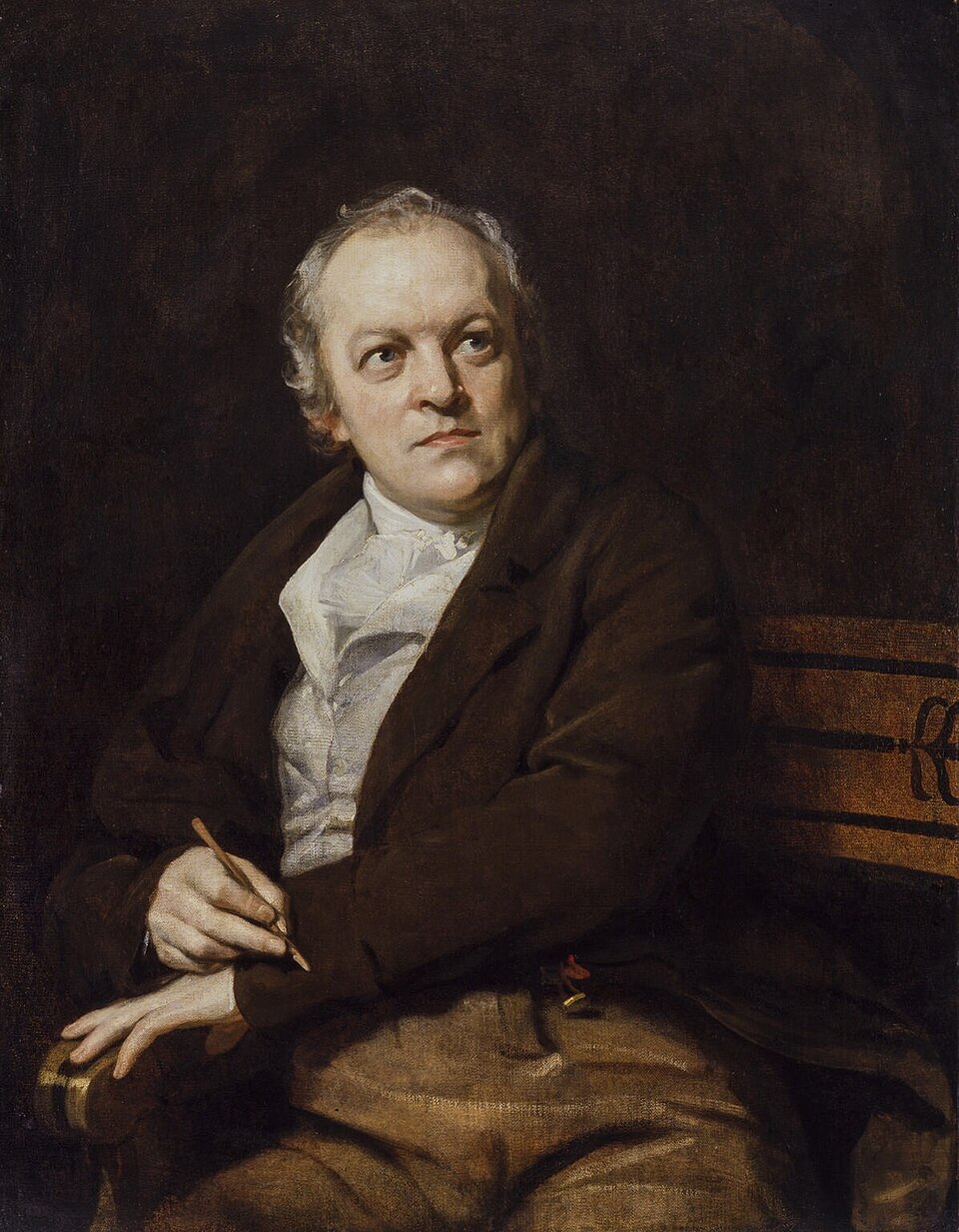
If one person could be said to have created the visual images needed to illuminate the ethos of the Romantic Age, it would be William Blake (1757-1827). Trying to categorise Blake is a fool’s game, as he cannot be classified in any formal way, but it is safe to say he was a poet and an artist, a master of watercolour. He was also an iconoclast of the first order, denouncing the Royal Academy as a fraud.
In this book by Tara Lee (The University of Hong Kong), we are led into the world of Romantic Biology. While the Romantic era is mostly remembered for its literature, it also offered an alternative view of science that many found appealing. Disenchanted with Newton? Turn to Goethe and his novel theory of colours. Or turn to Rousseau, who “replaced the dehumanizing language of mechanisms and balances with a humanistic metaphor describing the state as an organic body.” So much for Newtonian physics as applied by Montesquieu to describe a nation-state as a well-balanced machine! For the Romantics, Lee writes, the clockwork universe was dismissed. In Blake’s poem Milton, he calls it a “Newtonian Phantasm.”
Since much of this deeply insightful book explores what most readers would regard as highly esoteric matters (requiring an inordinate amount of grounding before any review comments could be made), I am going to focus in this review on one very substantive topic that is easily grasped: The French Revolution. Lee devotes 42 pages to it.
“This chapter addresses the political resonances of Blake’s organic imagery.” By examining the texts of three of Blake’s publications, “it presents the development of a key insight in Blake’s works: that utopia is a regenerative state of mind, not merely a state of biopolitical organization.” Picking up on this, she later writes that “Crucially, it was after a turbulent revolutionary decade of utopian miscarriages that Blake came to envision political change in preformationist terms of rejuvenation instead of epigenesist themes of gestation and birth.”
There are several points to unpack here. First, the ‘revolutionary decade’ refers to the 10 years following the French Revolution of 1789. The nonsensical idea of preformation was that “the embryo was already fully formed in the egg.” Lee writes that “the ready dismissal of preformation in recent Blake scholarship has resulted in a misunderstanding concerning the relationship between generation and regeneration in Blake’s work.” Epigensis was the correct concept that organisms developed. But how this happened ran into dangerous shoals in the 18th century.
The “tendency towards organization was motivated by an immanent force – a certain plastic power. Philosophers borrowed the prestigious Newtonian concept of invisible forces to account” for this. Maupertius “invoked the Newtonian concept of attraction” in his theory of generation. For Blake, there was always “a tension between generation and regeneration.”
Early in the book, Lee makes a critical observation: For Romanticists, “The essential powers of life were not powers of change and protean growth but of restoration and healing.”
In her study of the French Revolution, Lee offers a quote from John Bowles, “who wrote profusely against the French Revolution.” In a 1794 text, which Lee does not quote from (reference below), Bowles describes the revolution in France as a “pernicious system which threatens mankind with devastation. Like a cameleon, it may change it hues, but it will continue to survive and to destroy.” This is an example from the animal kingdom of the ‘powers of change,’ and the fact Bowles uses the word ‘survive’ implies that the French Revolution possessed organic qualities, like the cameleon (his spelling, without the ‘h’). This places it centrally in the Romantic belief of vital energy. It is unfortunate Lee did not incorporate the cameleon analogy in her explanation of the revolution, as it would have amplified her argument in here: “This chapter situates Blake in a rich culture of thinking about revolutionary politics in organic terms rather than tracing direct sources of influence.”
During the decade under discussion here, “Blake works towards a way to articulate the contradictions latent in the idea that liberty could be guaranteed by the self-wrought structures of the state.” But one of the three texts by Blake I mentioned earlier is titled Urizen, a personage who serves as a rebellious parody of the book of Genesis. In this 1794 story there is a creative blacksmith “whose attempts to shape molten terror into living form end in the creation of Urizen’s ossified body and the extinction of revolutionary energy, but this new creation ultimately signals the death of liberty.”
Lee makes manifest what this is all referring to: “The French have obstinately crafted a new state on the anvil, presuming to have produced perfect laws founded on universal principles of reason.” But what actually was brought to fearsome reality was The Terror: not the mythical molten terror forged by the blacksmith, but the real Terror of 1793 that saw the guillotine sever the heads of thousands of innocent people, including scientists. The French Revolution, presumably born of high principles, has forever since then become synonymous with The Terror and the death of liberty. And from it followed the Napoleanic Wars, which caused millions of deaths across Europe.
In 1793, “Blake saw the events in France as a ‘terror’ flying in like a comet, or like the planet Mars, having displaced the Sun, releasing comets of violence from its control.” Blake actually wrote a text in 1791 entitled “The French Revolution.” Lee tells us that it “was set in type by the radical publisher Joseph Johnson but ultimately none of the books were published” due to harsh censorship laws in England. It was in this text “that the vital heat metaphor for revolutionary politics is at its most explicit,” writes Lee, but she not draw a direct connexion between this and the comets released from the Sun in Blake’s 1793 book. I think it is safe to draw the conclusion that these comets embodied the ‘vital heat’ at the heart of the French Revolution, which England used censorship laws to shield itself from, lest they ignite unrest and revolution there too!
Another vitalist expression in vogue at the time also seems absent from this book on Romantic Biology. In England, one talked about “members of the Royal Family,” but in France they used the evocative phrase “The Princes of the Blood Royal.” Blood being the very essence of life that circulated through the body.
Mentioning this would have nicely set up what Lee actually did write: “By imagining France as a unified body circulating with revolutionary fire, Blake discards the hierarchical framework in which the conventional interpretation of the body politic was embedded.”
“In the case of the French Revolution,” writes Lee, “the new polity seemed to be infused with life, but the new France soon found itself trapped within a dismal, changing body.”
Lee often contrasts the views of Blake and Edmund Burke, the most famous critic of the revolution. Lee neatly encapsulates Burke’s conclusions: “The attempt to organize a new political order from first principles was to rebuild a Frankenstein body out of fragmentary pieces of human tissue. It was bound to fail.”
One can glimpse the complexities and insights of the entire book by this deep dive into just one chapter. Lee’s book deserves to widely read, not just by historians, but by those who see the revolutions of the 21st century and wonder what terrors may yet unfold.
There is a typo on pg 94: Kind should be King.
William Blake and Romantic Biology: Evolution, Originality, and Organic Form, is by Cambridge University Press. It lists for $130. This is the 155th book in Studies in Romanticism, by Cambridge.
Image: William Blake by Thomas Phillips, an 1807 painting in the National Portrait Gallery, London. Courtesy of Wikimedia Commons.
This work is in the public domain in the United States because it was published (or registered with the U.S. Copyright Office) before January 1, 1931.
Reference:
Bowles, J. (1794). Reflections submitted to the Consideration of Combined Powers. London.