
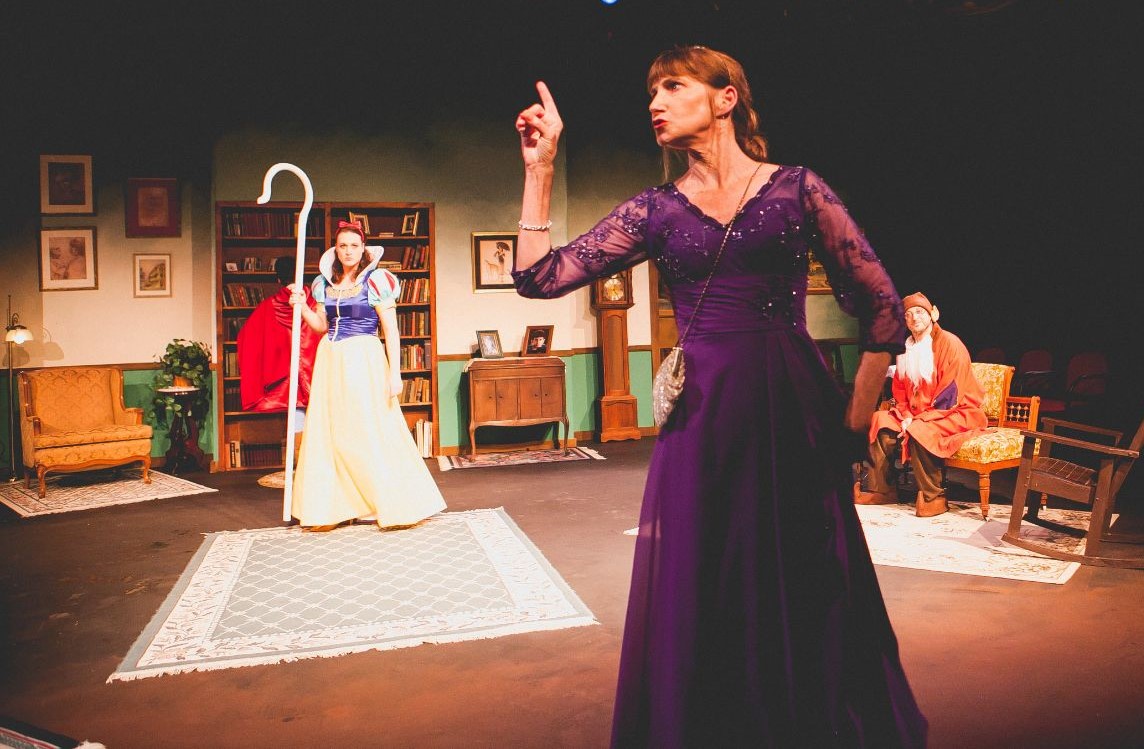
I went to Christopher Durang’s Tony Award-Winning Comedy with mild excitement on opening night as I entered the Sterling Theatre. As a huge fan of Russian literature since my teens, Chekhov has been one of my idols. I’ve read all his major works, The Seagull, The Cherry Orchard (which has been performed onstage forever), Uncle Vanya and other classics.
“What will it be like if the whole world goes to rack and ruin?” is one of Anton Chekhov’s famous lines.
Chekhov would feel right at home in Bucks County, Pennsylvania, in the 1960s where siblings Vanya performed by Rick Felkins and Sonya played by Sheryl Gilchrist (the adopted sister) are marinating in nostalgia and regretting their pathetic lives. Both are stuck in their childhood home, where they cared for thei now deceased parents, mourning lost dreams and the passage of time. Nothing seems to change as they sip coffee each morning overlooking the pond where they hope a heron will wade.
Their quirky, fortune-telling maid Cassandra played by Christina Little-Manley keeps the joint jumping as she predicts gloom and doom (accurately) in her hippie-ish outfits. Their glamorous, movie-star sister Masha performed by Jody Rudman, sweeps in with her ridiculously handsome (and often shirtless and pantless) much younger boyfriend, Spike played by Ty McLeod visits them and then all hell breaks loose as we follow the threesome to a costume party. From that point onward, the play unfurls into chaos descending into a typical Chekov darkness. A neighbor’s daughter Nina played by Frida Cantu gets caught up in the maelstrom of the lives of this dysfunctional family yet keeps her cool and optimism.
What ensues is a hilarious weekend of sibling rivalry, fragile egos, and mugs shattering faster than you can say “family therapy.” The laugh-out-loud references to much of Chekov’s work were woven throughout the performance, but sadly was missed by most of the audience who sat like wooden figures at a puppet funeral. References to 3 Sisters were made as were those to Uncle Vanya by virtue of the siblings’ names Vanya and Sonya.
Vanya, a repressed gay man in his 50s, and Sonya, a loveless single woman in her 50s who hasn’t left the house or dated in over three decades, are siblings. Their self-centered and egomaniacal sister Masha is the only one with a job and income. Despite her five failed marriages, she supports Vanya and Sonya by paying their mortgage and giving them a small stipend, though she rarely visits.
We experience the transformation of each character, watching them blossom in the course of their performances and applaud their self-awareness at the end. No matter the trials and tribulatons necessary to get to that happy place each actor played their role with authenticity. Their directness, in particular Sonya and Masha-sarcastic and cryptic-was shamelessly rude and very funny. Kudos to the director Tracy Arnold and the stellar cast. Seeing this play gave me a jolt of
Get tickets now. The show runs until April 6 at Sterling Stage Austin. Located at 6134 Hwy 290, Austin, 78752. https://sterlingstageaustin.com/events/ Email: sterlingeventcenter@gmail.com