
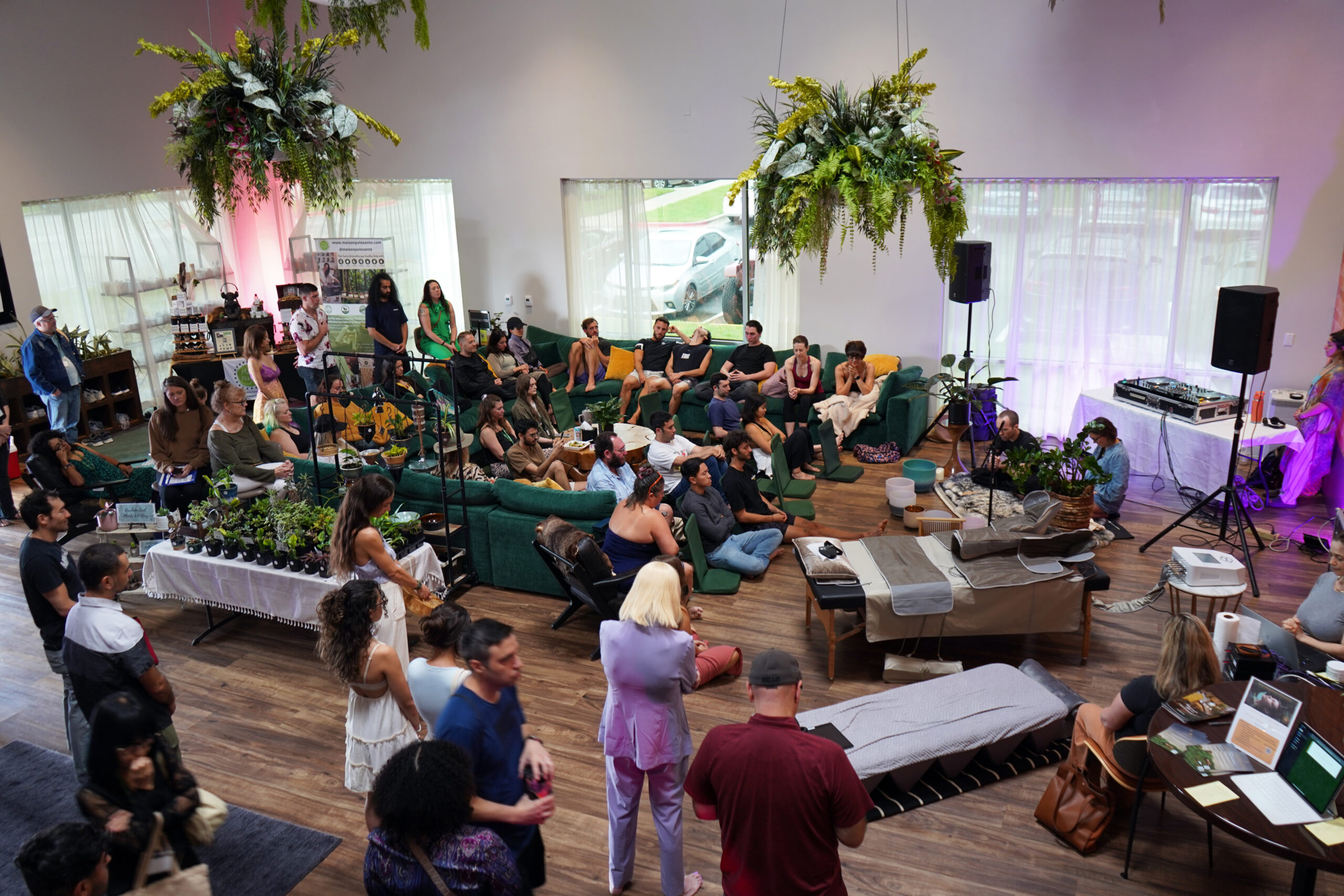
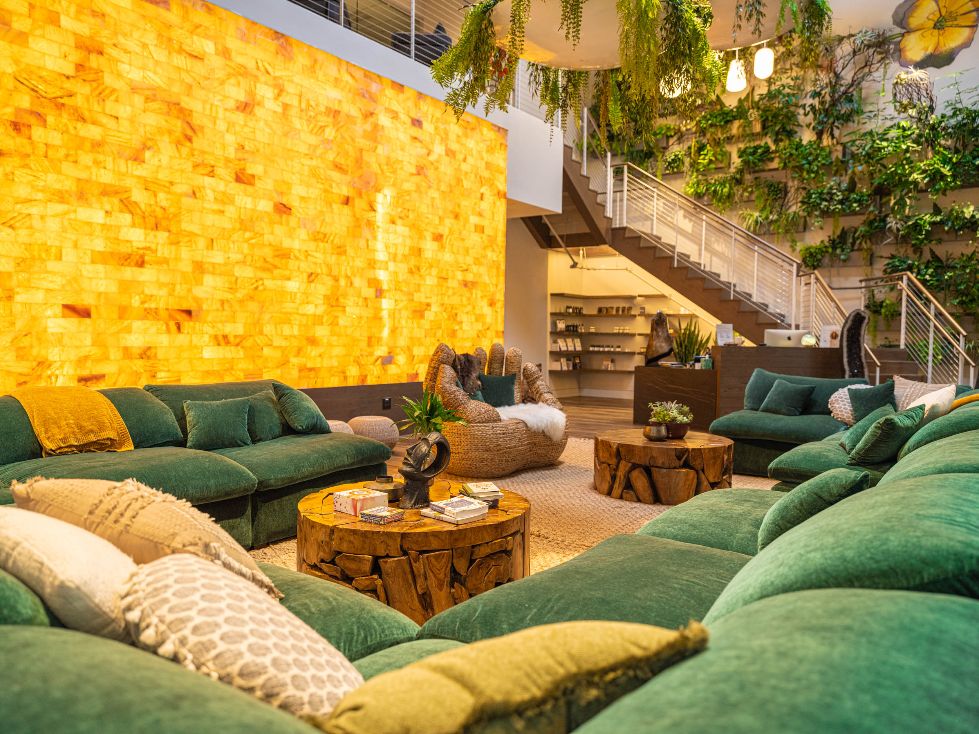
I was unaware that Kuya had opened its doors at the end of 2021 to an eager public seeking a scientific and holistic regenerative approach to health. It was founded by a group of local investors who wanted an Austin-based retreat so they didn’t have to travel out of state. Kuya is not your traditional wellness center; it is a haven to elevate your personal healing journey. With 11,000 square feet of calm spaces, one easily drifts barefoot in and out of the two-story space with ease.
Meg Dwyer, who oversees the Neurostimulation program, talked with me a bit about what they do at the facility.
“EEGs are taken, and a brain map is sent to Dr. Tiff Thompson, who runs NeuroField. She has a Ph.D., QEEGD, BCN, LMFT, and is a clinical neuroscientist, licensed therapist, educator, and technologist. She is the founder and owner of the Santa Barbara clinic, NeuroField Neurotherapy, where she offers clinicians quantitative electroencephalography (QEEG)-based functional brain consulting.
“She reads the electrical outputs – which neurons are over and under-firing and a report is printed and analyzed. Our customers include people with concussions, traumatic brain injuries, OCD, and social anxiety who find this therapy helpful. The course is ten sessions long.
Ketamine Assisted Therapy. This is a six-session program facilitated by a medical doctor to help with mental health conditions like depression, PTSD, and anxiety. You can tailor this program in a multitude of ways. Regulating the nervous system while engaging with the Kuya community brings forth a wellspring of connectivity, something people lack, which is part of the reason mental health issues occur in the first place.
IV Infusion Therapy. Kuya offers a variety of boosters, from red blood cells to mood enhancements, relaxation, and alkaline balancing.
OPUS Sound Therapy. I had the pleasure of trying out the sound bed. At first, before stepping into the chamber, I thought, ‘sound therapy, I’ve done that before with a practitioner using a tuning fork to attune my body’s sound and Tibetan bowl music, with chanting,’ but this was unexpected. If you’re old enough to remember vibrating beds at motel rooms, the kind where you put a quarter in and for fifteen minutes your bed rocked and rolled, you’ll get the gist of OPUS. It vibrates quite intensely, starting from your calves to your neck, and then moves to a pre-determined rhythm programmed to match the soundtracks on the iPad. I first chose a bird sound but found the vibration too hard. Then, I switched to a soothing ambient track and enjoyed the movement as I lay on the bed in a dark room (my choice).
Cedar Sauna and Cold Plunge Pool. I didn’t try the latter as it was too hot outside, and I felt sticky. However, I’m looking forward to it.
Lymphatic Massage was the best modality I tried. Someone wraps you manually in leg and arm nylon with velcro to keep the attachments secured and well-fitted. The outfit is attached to pumps, which cause pressure up and down your entire body, like taking your blood pressure only everywhere, in a tightening and releasing motion. After the 45-minute session, I felt rejuvenated and highly recommend this for circulation and natural lymphatic drainage.
Sensory Deprivation Tank. I last experienced one of these in Amsterdam in 1994. It was the first of its kind, so I was thrilled to try it again after such a long time. The technology may have changed. This tank is wide, so you can almost reach a 45-degree angle as you float, depending on height. There is no music or sound, so you can meditate in peace and listen to your breath. The tank is in a private room with a shower, earbuds, and a foam neck brace to keep your hair somewhat dry.
Kuya is a membership club. What sets it apart from others is the freedom to come and go and use any of the magnificent rooms upstairs or downstairs for meetings or just to relax, much like a co-working space. Additionally, there are events and happenings.
Visit the website kuyawellness.com for more information, or email them at hello@kuyawellness.com
Located at 4401 Freidrich Lane, Unit 300, Austin, TX 78744.