
The Quiet Resurrection of Austin’s First True Chinese Banquet House
When the old New Fortune banquet hall in Chinatown on North Lamar shuttered during the uneasy stillness of the COVID years, a kind of cultural oxygen drained from North Austin. The once-bustling room, a sprawling cathedral of red carpets and round tables, fell silent. For two years, no clattering dim sum carts circled the aisles, no wedding toasts bounced off the high ceilings, and no families gathered beneath its lantern lights. The place felt as though it had lost its purpose. It waited—empty, cavernous, and almost mourning itself.
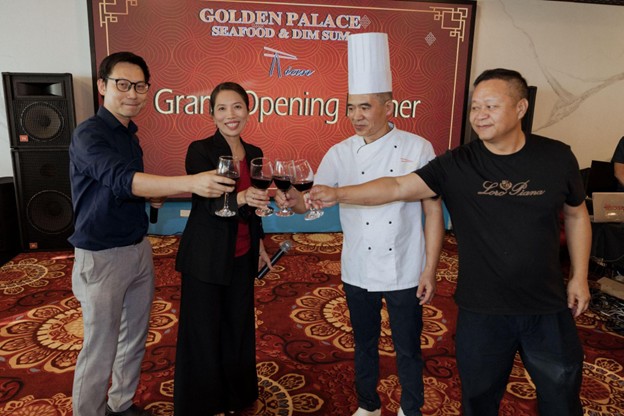
In February 2025, the lights flickered back on, not with fanfare but with resolve. A chef named Sam, carrying a lifetime of global culinary experience, stepped into the void with his long-time partner, Mako. Their approach was almost monastic. They didn’t announce their arrival or saturate the city with marketing. They simply reopened the doors and returned life to a space that had been in suspended animation in the aftermath of loss.
Sam’s journey began in Hong Kong decades earlier. Trained in the heat of kitchens where he learned techniques through muscle, repetition, and grit. His work took him from Hong Kong to mainland China, then to Japan, then to South Africa, and eventually to Canada, where he spent ten years honing banquet cooking and seafood mastery in Vancouver and Toronto. His last stop before Austin was Texas—first Houston, then Katy—where he opened Hong Kong Food Street, a restaurant also known in some listings as Kung Fu Street. In 2025, it earned a quietly triumphant nod in the Michelin Guide. For Sam, it wasn’t a crowning moment as much as confirmation that doing things the right way still mattered.
It was Mako, the strategist, who recognized what Austin lacked. He saw a city on the rise, flush with ambition, taste, and growth, yet somehow starved of real, traditional Chinese food. Not the American-Chinese hybrids that have taken root over the years, but food grounded in the techniques Sam had carried across continents—handmade noodles, delicate dumpling skins, carefully lacquered duck, and dishes that require patience and devotion. Mako understood the gap instinctively and encouraged Sam to bring his craft to Austin. Their partnership—part brotherhood, part business, part trust—made the leap possible.
The banquet hall became the canvas. Sam rebuilt the kitchen with his own hands, and it brought back the hum of a place that had been left in suspension. The work was slow, deliberate, and intimate. Austin barely noticed at first. How could it? A city accustomed to decades of second-rate Chinese food didn’t yet know how to recognize what it was being given.
Then came Vincent, Sam’s nephew, who stepped away from an entirely different life. Before Austin, he ran his own police precinct in Hong Kong. His training in negotiation, crisis management, and community mediation carried naturally into the restaurant. His leadership is calm, transparent, and unusually empathetic. He tells me that a restaurant is only as good as the emotional state of the people who work in it. “We are together twelve hours a day,” he says. “More than with our families. So we must be like a family.” You can see the truth of it in the way the staff move around him—comfortable, communicative, unafraid. Under Vincent’s guidance, the front of house feels more like a well-run community center than a workplace.
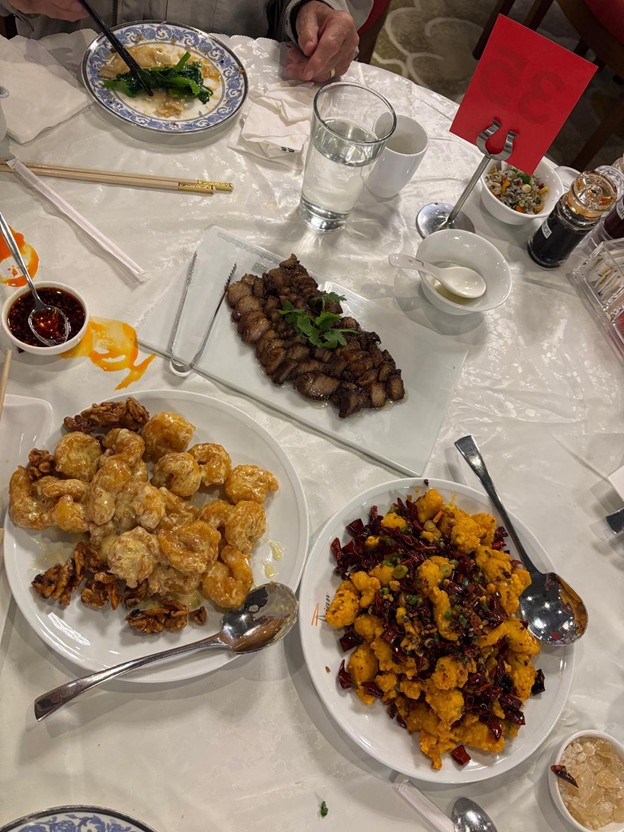
Cooks from mainland China, many of whom speak little or no English, staff almost entirely the kitchen. Yet through gestures, demonstrations, and the universal language of food, they execute dishes with a precision that belies the communication barrier. Every plate reflects a muted discipline. Handmade rice noodles. Freshly rolled dumpling skins. Chow fun cut and tossed by hand, not machine. A short rib dish with roots tracing back through multiple countries. Dim sum crafted in small batches. And the elusive, often butchered, but here perfectly executed Peking duck—crisp skin, soft pancakes, and the careful balance of fat to flavor that only traditional technique can yield.
I’ve spent more than a decade as a food critic in Europe and grew up in Flushing, Queens, home to one of the most vibrant Chinatowns in the country. Austin’s Chinese food scene has long lagged cities like Houston, New York, Vancouver, and Toronto. What Sam is bringing to Austin isn’t simply superior—it is entirely new to the city. The irony is that the restaurant doesn’t advertise any of it. Diners sit unaware that they’re eating handmade noodles because the kitchen never announces it. There is no sign hanging above the dim sum carts proclaiming the difference. It is humility in its purest form, but it also means Austin doesn’t yet understand the treasure sitting in front of it.
The philosophy behind the food goes back to a restaurant Sam and Mako once co-owned in Dallas called Tian Tian—天天—a word that translates loosely to “every day,” but in its doubled form implies something elevated: every day touched by heaven. Every day, he lived like a god. The name is both a blessing and a standard. It’s the ethos Sam brings into each dish, whether diners hear the story.
The resurrection of the banquet hall extends far beyond the food. It became possible only because of another person woven into its story: Chloe, a Vietnamese-American community leader whose connection to Austin runs deep. She came to the United States alone at nineteen, built a life from scratch, earned a nursing degree, opened a flower shop, and co-founded a nonprofit offering free ESL, BSL, and citizenship classes. When the previous banquet hall shut down, the collapse was catastrophic for the Vietnamese community. Weddings evaporated. Vendors lost their livelihoods. DJs, photographers, dressmakers, and coordinators saw decades of cultural infrastructure crumble overnight.
She stepped in with the determination of someone who had rebuilt her own life before. Chloe resurrected the banquet ecosystem by reconnecting her network—wedding planners, florists, decorators, caterers, and families. She brought life back into the hall through celebrations: Vietnamese weddings, quinceañeras, corporate gatherings, cultural banquets, and even the longstanding Jewish tradition of Chinese food on Christmas. Her involvement wasn’t about business. It was about restoring a community heartbeat.
The more time you spend in the restaurant, the more the human story reveals itself. Vincent speaks about leaving his wife and children in Hong Kong, hoping to bring them to Austin once he can offer stability. He says he doesn’t need wealth—just enough to support his family. Chloe shares stories of the mainland and Hong Kong staff learning to work together, adjusting to each other’s rhythms. A server from a Four Seasons wine event wanders over laughing, remembering the moment she first met the owners. A dish arrives slightly too chewy, and Vincent immediately notes it, promising to adjust the cooking process. These minor exchanges form the emotional architecture of the restaurant.
This is not a perfectly polished space. It is alive, honest, and always evolving. The staff discuss improvements openly. They notice what customers need before being asked. They fix errors without defensiveness. It feels like a family not because someone branded it that way, but because the relationships have grown naturally into that shape.
Austin has always prided itself on its food scene, yet Chinese cuisine has been its blind spot. The city embraced ramen, sushi, barbecue, fusion concepts, and pop-up creativity, but for decades, it settled for a diluted version of one of the world’s most sophisticated food traditions. What Sam, Mako, Vincent, and Taylor are building is a restoration—a bringing-back-to-life of something the city didn’t even realize it was missing.
Their restaurant is a revival of traditional techniques, of handmade craft, of banquet culture, of community infrastructure, of the belief that food can anchor people in unfamiliar places. Sam didn’t come to Austin to be celebrated. Mako didn’t encourage the move to create an empire. Vincent didn’t leave Hong Kong to chase prestige. Chloe didn’t revive banquets for recognition. Each person acted out of necessity, instinct, and a sense of collective responsibility.
Now, in a once-deserted banquet hall glowing again with life, a new chapter is quietly taking shape. You can sit at a table any day of the week and experience food that carries the weight of history, movement, and migration. Food made by hand, served with humility, and rooted in traditions older than the city itself.
Every day, at this quietly brilliant North Austin restaurant, you eat like a god.
Photo Credit: Golden Fortune Tian Tian
10901 N Lamar Blvd BLDG A1, Austin
Goldenpalaceaustin.com
(512) 806-7777