
The only real problem with this massive volume is the fact that it is so massive! At 819 pages, it is actually difficult to hold for any length of time. Best to prop it up on a book stand.
Nigel Aston of the University of Oxford has done a great service to his university by taking a deep dive into every aspect of it during the 18th century. The book is broadly divided into three sections: Intellectual Presence, Institutional Presence and Interactions; and Cultural Constructions, Connections, and Tensions. Each of the 12 chapters contains copious footnotes, some 3,000 in total; this is in addition to a bibliography that runs to some 90 pages! Even a lengthy review could hardly do justice to such a sweeping and thoroughly researched book.
While the author writes plenty on what this book is about, he also makes it clear in the first chapter what it is not about. “This book is not going to shoehorn a study in Oxford’s place in the wider culture into any of the various sub-categories of Enlightenment that have recently been presented.” He lists theological, religious, Anglican and counter-Enlightenment. None of these, he states, “constitutes an exact paradigm that appropriately labels the dynamism, the cosmopolitanism, the range, and the torpor of the University’s life over more than a century.” He develops this argument throughout chapter 2, ending with an important declaration. “There is nothing paradoxical or inconsistent in arguing that historians have tended to overlook one of the central claims of this book, that Oxford and the moderate Enlightenment were comfortable with each other, even that Oxford was a primary locus for the moderate Enlightenment in England.” Indeed, he notes that the Oxford word for Enlightenment had existed since the sixteenth century: ‘illumination’ was part of its motto Dominus illuminatio mea.
Like most venerable universities, it benefitted greatly by bequests, but fortune did not always smile on Oxford. “The 2nd Duke of Ormond and Lord Arran between them held the Chancellorship for seventy consecutive years,” writes Aston. Thanks to the Duke’s debts, the only thing it received on his death were the family papers. And Lord Arran was so cash-strapped that when he died, the university had to console itself with his full-length portrait. Not a penny from either one!
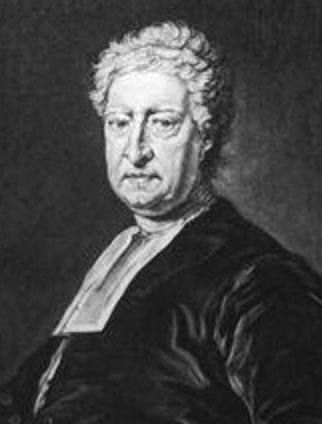
Aston gives due study to science, noting that Oxford trained 34% “of all English pioneers of science in the eighteenth century,” but the “core scholarly work of the eighteenth-century University was the production of books expounding, glossing or defending aspects of the Christian faith and the place of the Church of England in the providential scheme of things.” But even on this supposedly secure subject, a certain Oxonian wrote a book that, in Aston’s words, was “influential enough to infect this subject for a century after his death.” That person was Matthew Tindal (see image below), who wrote the explosive book Christianity as Old as the Creation in 1730. “He offered the orthodox abundant embarrassment in arguing that revelation added nothing to discerning the laws of nature not already imparted by reason, and that as much guidance was provided for the moral man in Confucius as in the Sermon on the Mount.”
Taking a broader view of this era, English universities “were as much constitutional adjuncts as academic institutes.” Like its famed rival Cambridge University, “Oxford was a core part of the British state and its loyalty to that state.” A key theme of the book thus requires a thorough grounding in English politics. During the reigns of George I and George II, the Whigs were in complete control of the government, with the Tories in perpetual opposition. Unfortunately for Oxford, it was a bastion of the ideology associated with the Tories, some of whom wanted a return of the Stuart monarchy (they were known as Jacobites). Oxford’s loyalty to the crown during these decades was often suspect; the author shows how it walked a tightrope.
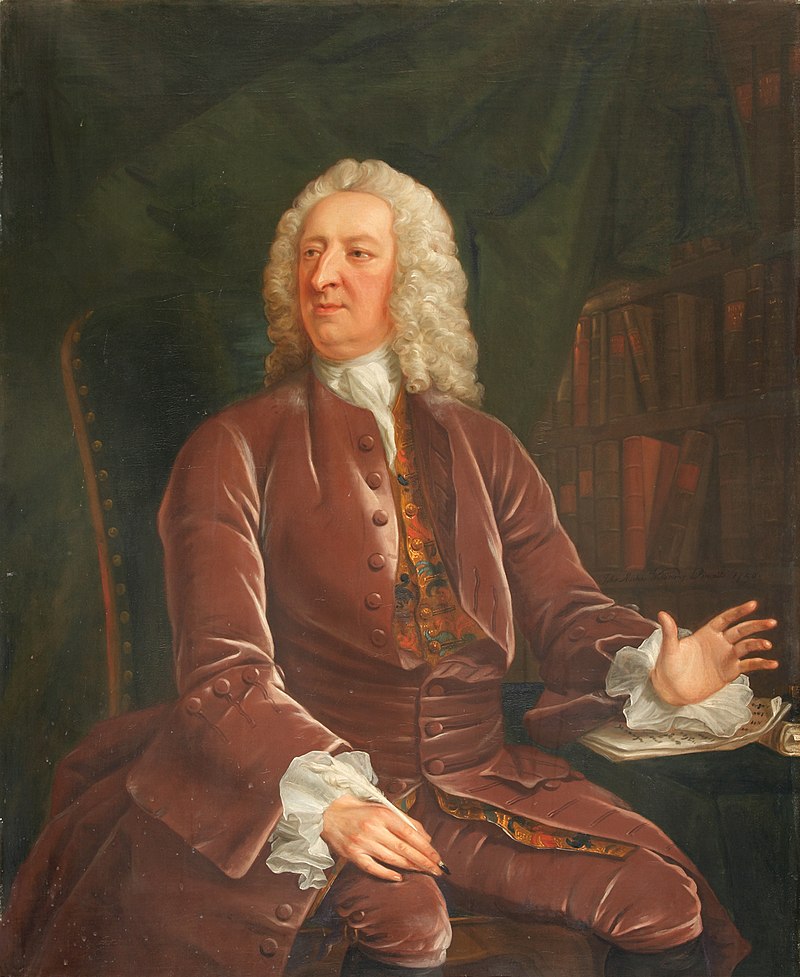
These were the days when a Latin oration at Oxford could capture national attention. A key moment happened on the opening of the Radcliffe Library at Oxford. The date was 13 April 1749, and the speaker was Dr. William King, principal at St. Mary Hall (lead photo). Just 3 years previously, the last land battle was fought on British soil when the Jacobite forces (trying to establish Bonnie Prince Charlie as king to replace George II) were defeated at Culloden. King George seemed secure on the throne, but William King was having one of it. To “stirring, suggestive effect,” William King “castigated the corruption of recent times” and called for the return of rightful kingship. “His sheer daring was breathtaking and commanded admiration and anger in equal measure. Dr. King was almost taunting the government to prosecute him as a Jacobite,” but the government did not take the bait. It is not clear from Aston’s text if the government knew that Bonnie Prince Charlie was secretly in London in September 1750, at which time he met Dr King. A footnote tells us that Prince Charles evinced a “lack of interest in the University.” As Aston explains, while Jacobitism was “exciting, scandalous and diverting,” most Tories at Oxford expressed a “willingness to make Toryism progressive and patriotic as the century wore on.” In 1772, the Chancellorship of Oxford was bestowed on Lord North, who just happened to Prime Minister of Great Britain! North, while a court Whig, also had Tory ancestors, and he kept a hands-off approach to the status quo at Oxford.
One aspect of Oxford life that Aston unfortunately misses is college journalism. The Loiteror ran for sixty weekly issues, from Jan. 31, 1789 to Mar. 20, 1790; and Oxford’s The Olla Podrida finished a 44-issue run in 1788. The Loiteror achieved fame in subsequent centuries because it was the effort of just one person: Rev. James Austen, the brother of Jane Austen (he is mentioned on pg 540). Even during its fairly short life, it was advertised in Bath, and pitched as “A New Periodical Literary Paper.” Both publications were collected and printed in book form; these publications offer a unique insight into what students were doing at Oxford, as opposed to the professors Aston focuses on. They merit an entire chapter in a book by Dr. Devoney Looser (see ref below).
Like a multi-generational film, such as Eternity or Sunshine, Aston’s book explores the ‘family’ of scholars, clerics, Parliamentarians, musicians (Handel premiered Athalia there in 1733, and Haydn performed his Oxford Symphony in 1791) and scientists who inhabited Oxford for a whole century. That it remains one of the very greatest universities in the world is due in large part to what happened there during the Enlightenment. Weaving together an engaging chronicle of a cast of hundreds was a Herculean task, one that Nigel Aston has succeeded at. While it is heavy enough for a doorstop, it really should take pride of place on any bookshelf.
The book contains several typos. “institution was” should be “institution that was” pg. 14; two words are stroked out pg. 25; “in the in the” pg. 33; “a taken by” should be “taken by” pg. 95; revisionary is spelled wrong pg. 210; the word tribulations is repeated pg. 342; and we find “in in” on pg. 360. The Index is excellent, but not perfect. For example, Jane Austen is listed as being on page 531, but she actually appears on 532.
Author Biography: Nigel Aston is a Research Associate at the University of York, and Reader Emeritus in the School of History, Politics, and International Relations at the University of Leicester where he taught for two decades. Educated at Durham and Christ Church, Oxford, he is the author of several single-authored books and numerous articles on British and French eighteenth-century religious and political history and is currently completing the editing of the Yale Boswell Editions The correspondence of James Boswell with the Rev. W.J. Temple, Vol. 2: 1777-1796.
Enlightened Oxford: The University and the Cultural and Political Life of Eighteenth-century Britain and Beyond, is by Oxford University Press. It is available on Amazon for $142.
Image: a 1750 portrait of Dr. William King. In the collection of the Univ. of Oxford.
Reference:
Looser, D. (2025). Wild for Austen. St. Martin’s Press.
(this book will soon be reviewed in Sun News Austin)