
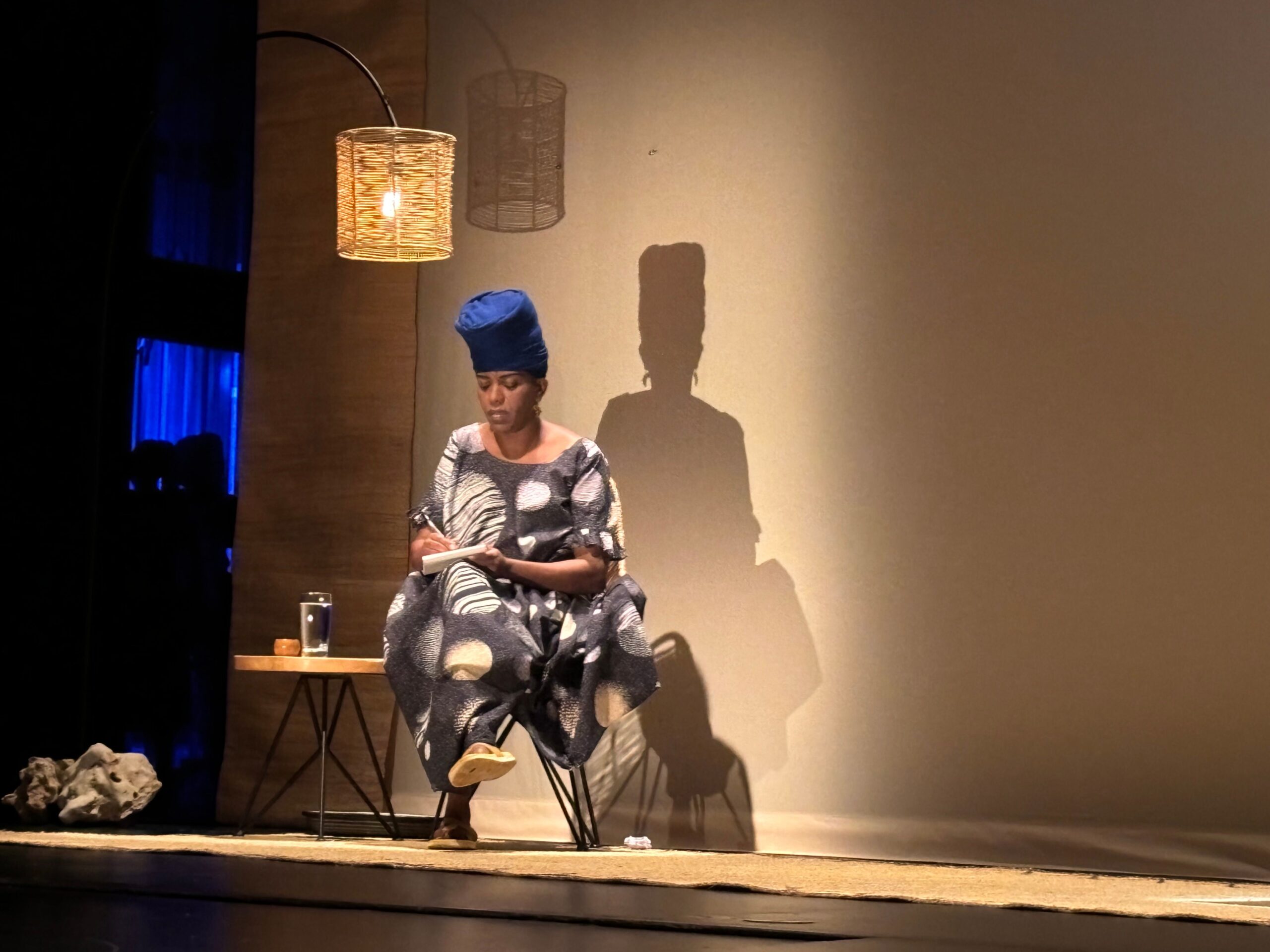
Humanity has been a cruel species, and some might argue we still have a long way to go until we ascend into a realm of peace and harmony. We have all read about, heard, or experienced sorrow and tragedy. Yet, none are as powerful as first-hand accounts of genocide, whether it’s oppressed African Americans whose ancestral relatives were torn away from them by brutal enslavers, WWII Holocaust survivors now in their nineties, or this show.
The Book of Life was written, directed, and performed by Kiki and featured six other Rwandan woman drummers and singers. These women survived the genocide the Tutsis inflicted on their people in 1994. Kiki, as she calls herself, wished to find a living voice among the dead, so she set out to record the representatives of the survivors. She embodies the spirit of Gandhi, Elie Wezel, and Mother Teresa. Think of larger-than-life people who have given their lives to better and uplift humanity, and Kiki comes to mind.
Gakire Katese Odile, “Kiki,” as she describes it, is a professional dreamer and a woman of firsts. She is a Rwandan playwright, director, and cultural entrepreneur. Among her many accomplishments in Rwanda are the first-ever women’s drumming company (Ingoma Nshya, Women Initiatives), the first professional contemporary dance company (Amizero Dance Kompagnie), the first international festival (Festival Arts Azimuts), the first national festival in Rwanda (Rwanda Drum Festival), the first co-op ice cream store (Inzozi Nziza – Sweet Dreams), and the first recipient of the League of Professional Theatre Women’s Rosamond Gilder/Martha Coigney International Award.
The Book of Life is a testament to life, love, and how the divine spirit drives goodness into the minds and hearts of people with unthinkable memories. The performance centers around the grandparents Kiki never met but felt in her “skin” and reflects the longing for the family never completed due to their snuffing out. Rwandan cultural history is oral. Kiki took the gargantuan task upon herself of speaking with survivors, recording the stories they wrote in their own words for her to transcribe and eventually perform on the world’s stages.
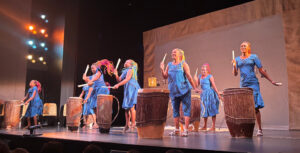
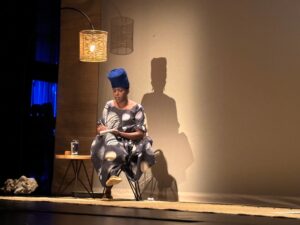
Kiki reads from a thick notebook of letters while the drummer women sing, chant, and ululate accordingly. They drum at different intervals between notes. Kiki spins her own story about her pain and sorrow, woven into the fabric of all Rwandan survivor stories. She doesn’t want pity or sympathy. No, her purpose is to celebrate the life she cherishes. Her inspirational and divine messages are for all to consider whether one had such horrid experiences in their ancestral history.
Her unconventional approach includes traditional storytelling techniques, such as shadow puppetry on a screen where a hand crunches paper. Each paper has one or two lines at most, crucial to each person’s letter being read aloud by Kiki.
I was dazzled by the colors of the umushanana (in plural: imishanana) worn by the Kiki at some point. She did a few costume changes throughout the one-hour-plus show. It is the traditional clothing dress of women in Rwanda and Burundi. They
The Texas Performing Arts held this show at the McCoullagh Theater at UT. It was my first time there. Space-wise, the seats were more comfortable than in Bass Concert Hall, but the venue needs a bit of renovation as the look and feel are very 1960s.
Insert photo by E. Krentzel