
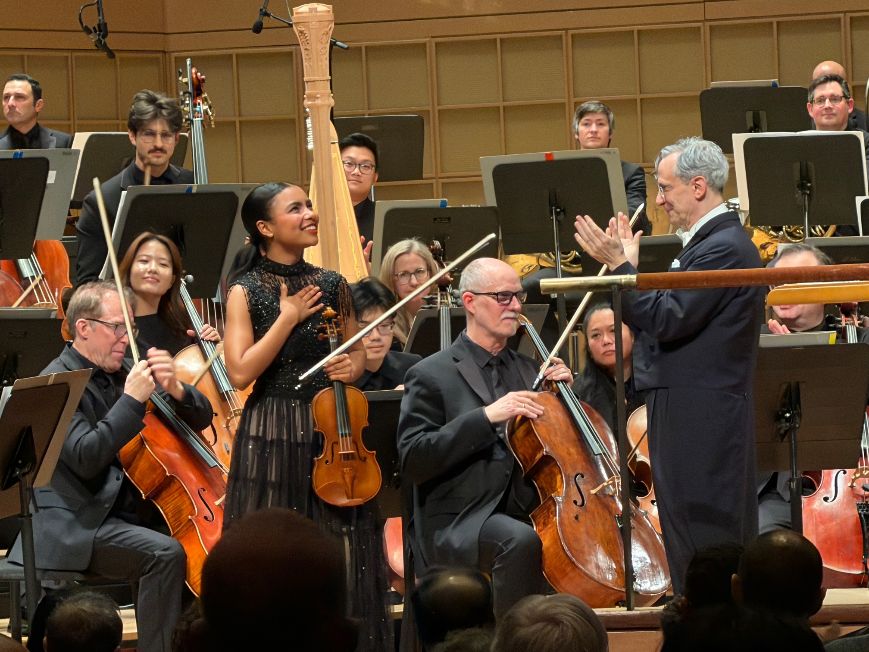
Celebrating its 125th anniversary season, the Dallas Symphony Orchestra is now led by Grammy Award-winning Italian conductor Fabio Luisi.
The DSO traces its origins to a concert given by a group of 40 musicians conducted by Hans Kreissig in 1900. The eminent Hungarian conductor and composer Antal Doráti, as Music Director in 1945, transformed it into a fully professional orchestra.
Much of the inspiration for the concert this past weekend can be traced to Doráti, as a trio of composers were featured, each with their own take on folk music from Hungary, Romania and Slovakia.
But the highlight of the concert was an astounding performance by a violinist who celebrated her birthday on March 28, by tackling one of the most difficult pieces ever written for that instrument.
Amargun Olmeda (born in Melbourne, Australia) has now reached the ripe old age of 18. When Miklos Rózsa wrote Concerto for Violin and Orchestra (opus 24) in 1953, he had in mind only one person who could play it: the greatest violinist of the age, Heifetz. After some cajoling, he not only agreed to play, but actually premiere it right here in Dallas. That landmark performance was held January 15, 1956. At the time, the Dallas Morning News music critic John Rosenfeld elevated the Concerto to the stellar heights of a modern classic, alongside works by Prokofiev, Bartók and Sibelius. The DSO has not staged another performance of the concerto until now, 70 years later.
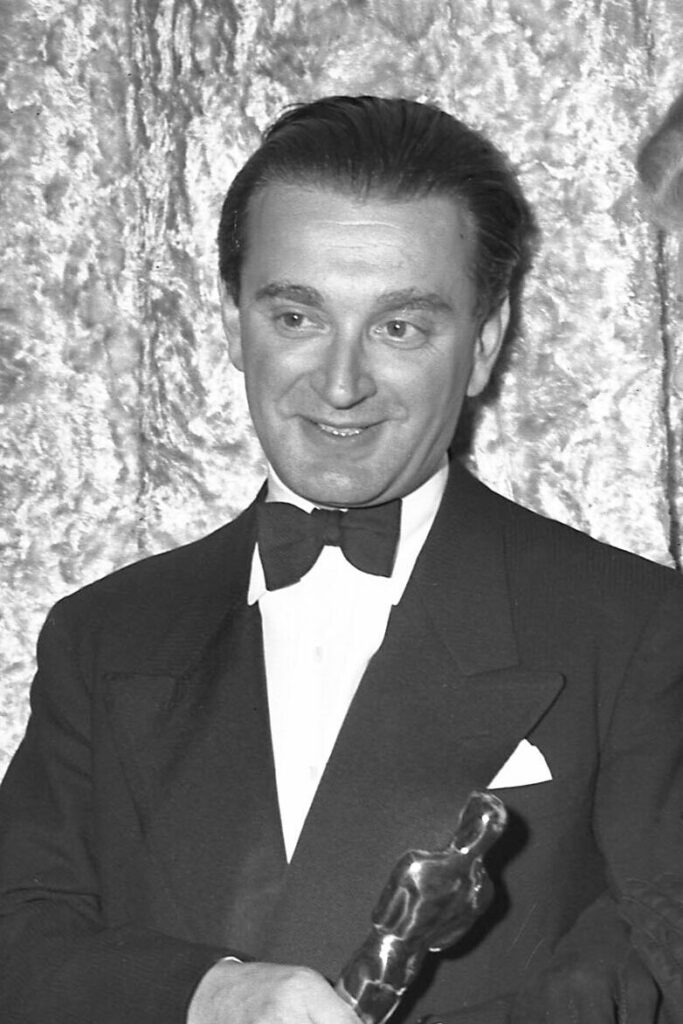
Like compositions by Bartók and Kodály (both of whom were also on the programme March 28), “the concerto is suffused with the spirit of Hungary,” to quote the programme notes. In my reviews, I often imagine certain pieces as appropriate for a movie score. In this case, Rózsa (pictured below) actually modified some of this concerto, at the behest of director Billy Wilder, for the 1970 film The Private Life of Sherlock Holmes. Sherlock was well-known to be an amateur violinist, so the adaptation served as “the love theme for Sherlock.”
The first movement features a dream-like sequence verging on a fantasia, which suddenly switches to a frenetic outburst by the violin, literally shaking itself and the orchestra awake. The orchestra responds with its own frenzy. It was this portion that was adapted for the film.
The subsequent violin solo reminded me of A Night on Bald Mountain by Mussorgsky. The orchestra follows this with an aromatic, lush background for the violin to continue in a more restrained manner. This therapy does not work: the violin erupts in an even more schizophrenic attack. This showed Olmeda at her best, as she channelled the emotional outburst of the instrument without letting it take over her mind. (In Texan terms, she did not get thrown off the bucking bronco!)
This helter-skelter performance was greeted with spontaneous applause, but the movement was not done yet. It concludes with an extended passage of a mysterious nature (a la Sherlock Holmes).
The Allegro vivace finale starts with a jolt as the orchestra exhibits a psychic break! This loud howl from perdition is greeted with joy by the violin, clearly relishing its distress. The violin then takes flight. Even the programme notes likens it to the “devil-went-down-to Georgia style shenanigans.” The orchestra merely bleats with some quick notes, having been completely beaten into subservience by the violin. As for the finale, I can only say the composer used a blowtorch. The rousing standing ovation was richly deserved by everyone on stage.
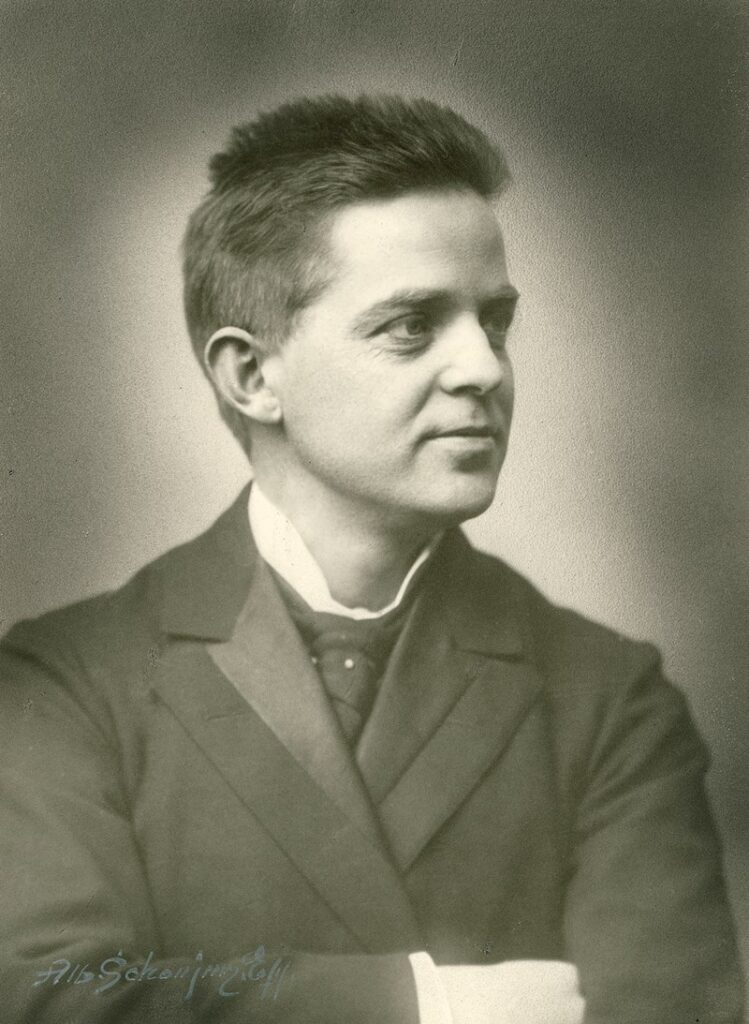
The concluding East/Central European dances, by Brahms, Bartók and Kodály struggled after the Concerto; I think most people were still in some degree of Freudian therapy. Also nearly lost in the mix was the opening number, whose name and composer was kept secret until after intermission. Luisi told the audience it was Helios, by the Danish composer Carl Nielsen (photo below). It was premiered by the Royal Danish Orchestra in 1903.
At first, we hear a gentle ‘calling forth’ by the brass section. The woods and strings duly follow. The rhythmic elements gradually intensify, giving the brass instruments permission to herald a spectacular sunrise. This strident passage results in the Orchestra delivering a nearly full-volume effort as intense sunshine baths the listener.
A meandering section is followed by breaking waves of intensity. The listener is primed for a rousing crescendo to conclude, but Nielsen went a different direction: it ends in a murmur as the sun sinks over the horizon at day’s end. An entirely delightful composition, and a fitting way to celebrate 125 years.
For tickets:
Dallassymphony.org
Lead photo: Olmeda, at left, basks in applause from the audience and conductor Fabio Luisi. Photo by C. Cunningham
Second Photo: Miklos Rózsa holding an Academy Award he won in 1946. Courtesy of Wikimedia Commons.
Third photo: Carl Nielsen. Courtesy of Wikimedia Commons.